Sunday, January 24, 2010

Bedugul - Bali

Bedugul is an area in the central mountains of Bali. Bedugul Area is composed of 3 lakes (Bratan, Buyan and Tamblingan) and one main town (Candikuning).
http://www.bigextracash.com/aft/f2b5c7de.html

HOW TO REACH BEDUGUL

Bedugul is located 48 km north of Denpasar, on the main road from South Bali to the North Coast (Lovina and Singaraja).


WHAT TO SEE AND DO AT BEDUGUL

The most visited places of Bedugul are:

  • Ulun Danu Temple on Lake Bratan. Unique Temple on a small island on the lake.
  • The Bedugul Botanical Gardens (Kebun Raya Eka Karya) with trees collection and Bali Treetop Adventure Park.
  • The Traditional Market of Candikuning.
  • The Bali Handara Kosaido Golf and Country Club.
  • Bali Treetop Adventure Park, Bedugul Botanical Gardens, Tel.: (62)(361) 8520680. The park includes six main circuits that stretch from tree to tree, as well as nets, Tarzan Jumps, and bridges. Each run also features "Flying Fox" zip-lines of up to 160 meters, providing heart-pounding thrills to guests as they fly through the air. Two circuits are designed for young children from 4 years old.
  • Bali Handara Kosaido Golf and Country Club. At an alitude of 1.142 meters above the sea level and surrounded by green mountains, crater lakes and ancient forest, the course is considered as one of the greatest golf course in the world.
  • Water sports on lake Bratan. Parasailing, speedboat, jetski.
  • Trekking in the mountains. Departure from the Lake Bratan or from Bedugul Botanical Gardens
  • Soaking in Angseri hot springs. Angseri lies about 20km to the south. From the main market head directly south. It is well sign-posted.
  • Many small and affordable guesthouses in Bedugul.
  • Pacung Indah Hotel, 10 kilometers before Bedugul. 8 bungalows with panoramic views.
  • Bali Handara Kosaido Golf and Country Club. Up market hotel in the golf course.
Source: www.wikitravel.org

Saturday, January 23, 2010

Central Java Tours and Best Places to Vacation in Central Java

Central java tour and travel guide, Central java is one of the best places to tourist destination in the indonesia country after Bali. The best place to tour and travel in java is Borobudur Temple, Dieng montain and some the temples in this area

Here Tourism Indonesia would like to invite you to travel to familiar places and tourist attractions in Central Java. Central Java is one of the provinces in Indonesia which has attractions that are attractive and already very famous. Sightseeing in Central Java also included in the category of superior tourism in Indonesia, many sights can be an option for your vacation destination. Whether it's natural attractions, historical tours, cultural tours, culinary tours and a variety of other interesting attractions.
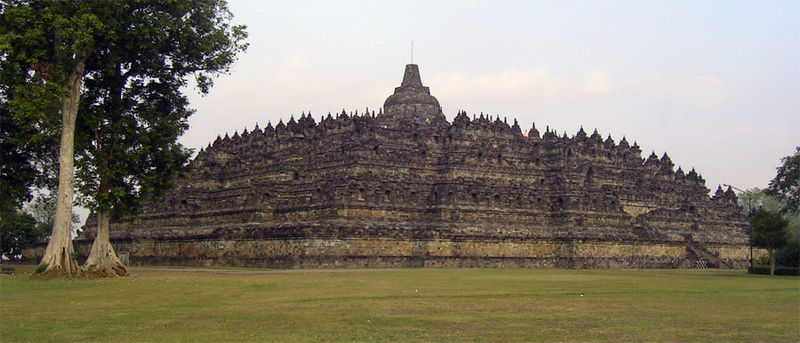
borobudur temple One example of mainstay attractions of Central Java is the Borobudur Temple. Borobudur temple is located in Magelang. Temple borobudur also included in the category of major tourist destination and part of 7 wonders of the world. Access to attractions is also very easy. You can use the road either by using private vehicles or ride public transportation. As a mainstay attractions of Central Java, Borobudur can you make your destination holidays. Borobudur temple is the result of royal relics of Buddha. In each year in this place there is always an annual event. And to promote these attractions to be better known by the outside world a few years ago in a cynical ever in marathon races held worldwide.

Borobudur, is the name of a Buddhist temple located at Borobudur, Magelang, Central Java. location where approximately 100 km in the south-west of Semarang and 40 km northwest of Yogyakarta. This temple was founded by the Mahayana Buddhists around the year 800 AD the dynasty during the reign of Sailendra.

wisata dieng, obyek wisata dieng, Dieng tours, attractions Dieng, other Sightseeing is also very attractive in Central Java is the Dieng Mountains. Dieng is a tourist place in the area Wonosobo Central Java province. Here you can find temples and a very beautiful lake. With the air temperature is very cool even at a certain season of this region until the temperature below zero. Create your streets like in the mountains obyak do not miss a very interesting tour of this. Images on this side is the lake is very beautiful colors.

Some other attractions in this area are:

* Lake: Telaga Warna, a very unique lake which sometimes led to shades of red, green, blue, white, and violet, Pengilon Lake, Lake Merdada.

* Crater: the most famous craters in the crater Candradimuka cynical.

* Some Hindu temples which include: Ghatotkacha Temple, Temple Bhima, Arjuna temple, Candi Semar, Sembadra Temple, Temple Heroine, Temple Setyaki, Gangsiran Ashwatthama, and Temple Dwarawati.

* There are also some of the Cave: Semar Cave, Cave Jaran, the Well Cave. Situated between Lake Telaga Warna and Pengilon.

* Well Jalatunda.

* Dieng Volcanic Theater, here you can see a documentary about the Dieng volcano.

Mount TANGKUBAN PERAHU

Mt. Tangkuban Perahu is Bandung's most famous tourist volcano just 28 km north of the city. This volcano offers many places to see and explore. Whether you look into the huge crater or hike down into it, stroll through the forest on its slopes, or simply enjoy the splendid panoramic view, Mt. Tangkuban Perahu is an interesting destination that everyone in the Bandung area is fond of visiting. When seen from Bandung, Mt. Tangkuban Perahu has a distinctive shape, like an upside down boat. Tangkuban Perahu means, in fact, "up-turned boat" This peculiar shape has stimulated the fantasy of the Sundanese people from early times as expressed in the Legend of Sangkuriang.

Geologically, Mt. Tangkuban Perahu has played a significant role in the development of the Parahyangan highlands. Eruptions have contributed immensely to the hills north of Bandung through lava flowing into the valleys and hardening into rock, thus forming big cliffs over which waterfalls leap. Likewise, mud flows have formed a semi-circular cone of gentle gradient (what geologists call "a fan"), which is now a mass that blocked the valley of the ancient Citarum River near present day in Padalarang (some 18 km west of Bandung), this caused a lake to form covering the whole Bandung plain.

Though the mountain appears peaceful, mild eruptions occurred in 1969, when Kawah Ratu spewed ash and barrages 500 m high. As recently as September 1992 it was closed to the public for a few days because unusually high seismic activity lead volcanologists to fear a new eruption. On the mountain's northern flank is an area called Death Valley, so named for its frequent accumulation of poisonous gases. On a reasonably clear day, from Kawah Ratu, the main crater, you can see not only the mountain range to the east, with Mt. Bukittunggul as its highest peak (2,209 m), but also two other in a northeasterly direction. The lower and nearer one is Mt. Tampomas ( 1,684 m) just north of Sumedang some 40 km away. To the right and about 90 km away is Mt. Ciremai close to Cirebon on the north coast. At 3,078 m, Mt. Ciremai is West Java's tallest mountain. At the foot of Mt. Tangkuban Perahu you see the Ciater tea plantation covering the rolling hills. Farther to the left are the northern coastal plains of Java, and on an extremely clear day you may even be able to see the Java Sea beyond.

Kawah Ratu, which means "Queen's Crater", is today just a big gray hole which sometimes has a pool of water at its center. Poisonous gases sometimes accumulate in Kawah Ratu, thus making it somewhat of a risk to descend to the crater floor. Beyond the saddled shaped depression on the far side of Kawah Ratu is the still active Kawah Upas, the oldest crater on the mountain. On the very far western cliff you see a spot where all vegetation has been destroyed by constantly rising sulphurous vapors. On the crater walls, note the various layers of material consisting of rock, sand, and pebbles. Overtime, new craters have formed again and again in a rather consistent shift from west to east. The most well known of these is the Domas crater, but also there are other smaller ones in jungle on the mountain's northeastern flank.
STORY
It is said that long time ago, there was a couple very much in love. They had a son called Sangkuriang. For some reason, the husband couldn’t walk around in his true form, so he was forced to assume the form of a dog. Sangkuriang loved the dog very much. One day, Dayang Sumbi, Sangkuriang’s mother, felt like eating a deer’s heart. Sangkuriang tried to hunt for a deer, in vain. In desperation, he killed the dog and took the dog’s heart to his mother. Dayang Sumbi, finally realizing that the dog had died, became extremely angry. He hit Sangkuriang, causing a wound on his forehead. Sangkuriang then fled, living somewhere else. Years had passed and Sangkuriang had grown into a fine young lad. Dayang Sumbi was as beautiful as ever. Sangkuriang met Dayang Sumbi then fell in love, not realizing that she was actually his mother. Dayang Sumbi shared the same affection, until she noticed the scar on Sangkuriang’s forehead. Convinced that she had found her lost son, Dayang Sumbi refused Sangkuriang’s marriage proposal. Sangkuriang persisted, so Dayang Sumbi asked him to build a big ship during the night. She thought Sangkuriang wouldn’t be able to finish this task. She was wrong—dawn was near, and the ship was almost complete. Dayang Sumbi then tricked the roosters to crow earlier, so Sangkuriang would think that the time was up. Sangkuriang was fooled. In bitter anger he kicked the ship aside. The ship then turned into a mountain.

Wonderful Places in Sumatra

Wonderful Places in Sumatra.

Bohorok
This places is for the adventurous, accesible through Sumatera’s inland wilderness, crossing rivers and going over steep hills. Area lies south of the Mount Leuser National Park, a rehabilitation center for orang utans in Bahorok, which was inaugurated in 1973, Orang utans living here are of Sumatera and Kalimantan origin.

Berastagi
Berastagi, a tourist town is another lovely town located in the Karo highlands. The town is known for its plantations and various kinds of flowers, vegetables and fruit, most famous of which is the “Marquisa” passion fruit.
It’s 66 km southwest of Medan and is 4.594 feet above sea level. There is a pleasant colonial‑style hotel with a golf couise. Other new hotels can also be found. From Gundaling Hill a clear view of Mt. Sibayak and Mt. Sinahung. volcanoes can be seen.

Jangga
Jangga is a village of native Bataks, located in the hills, on the main road to other Batak communities living separately there, like Lumban Nabolon village, Tonga‑Tonga Sirait Uruk village, Janji Matogu village, Sihubak hubak village, Siregar village, Sigaol village, Silalahi Toruan Muara village and Tomok Sihotang village.
There are monuments of King Tambun and King Manurung, traditional houses, cultural and other historical remains left by Batak Kings centuries ago. This natively unchanged Batak village has complete ornamentation, and is a often visited by domestic and foreign visitors. In this place, visitors call watch young girls or old ladies weaving the beautiful ulos cloth inside the booths then principle livelihood beside agriculture.

Sipiso‑piso Waterfall and Tongging
Tongging is a place to see a waterfall surrounded by beau­tiful sights in cool mauntain air. It is 24 km from Kahanjahe, located at the north side of Lake Toba. The 360 feet water­fall is visible from a gazebo at one of the tops of the hills.

The Village of Lingga
Located some 15 km from Berastagi, this is a unique Batak Karo village where traditional houses are still well preserved and inhabited today. Five to six families live in each house, unsepatarated by any partition, while each familiy have their own stoves.

Rumah Bolon
House of Bolon (Rumah Bolon), the long house that belonged to King Simalungun has now been restored and redesignd into a museum.

Source : http://goingbali.blogspot.com/

KUTA BEACH - BALI

Kuta Beach bustles with tourists vendors and locals. It's the most popular beach in Bali and the island's number one party zone.

Rapid development and an influx of visitors hasn't kept the surfers away and Kuta still remains one of Bali's best surfing beaches and a great place to enjoy the beach life.

While the surfers are still part of the Kuta scene, it's the shopping, nightlife and party vibes that attracts thousands of visitors. There's a huge choice of accommodation, restaurants and entertainment; so if you want to be within walking distance of a cool beach lifestyle by day and party by night - this is place.


WHERE TO STAY IN KUTA BEACH

Over the years Kuta development has spread out - almost absorbing the neighbouring villages of Legian and Tuban which now provide a quieter alternative toKuta central.
New hotel developments, guest houses and resorts fill every available space, yet almost all amenities are within walking distance or a short taxi ride. Seminyak, once a quiet local village, on the fringes of Kuta, has now become the smart sophisticated end, with fine dining and numerous local lifestyle shops.


THE BEACH

Relax.. on Bali's longest public beach. Hang out, sunbathe, eat, drink, play a game of volleyball or a challenge beach football match. Meet locals and other visitors and watch a stunning sunset over a perfect sundowner.Kuta basically offers 5 kilometres of hotels, bars, Internet cafes, juice bars, surf shops, restaurants, travel agencies and mini-marts. It can be (depending on the time of day and which end of the beach you prefer) busy and vibrant or totally chilled out.


WHAT TO DO IN KUTA BEACH

surfing kuta beach baliAround the end of Jalan Double Six, about 15 minutes from Kuta centre is Dreamland Beach. Lots of afternoon action and ball games, with plenty of drinks stands to make new (girl) friends. No shortage of bars and places to eat with some excellent places to chill and drink like Zanzibar and Blue Ocean.
Surfing! Bring your own board or rent one from the guys on the beach. Prices vary but average around 30,000rp per hour. If you haven't surfed before its the perfect place to learn. You can get a boat ride out to the outer reef breaks of Tuban or surf mellow beach breaks in front of the Hard Rock Hotel.


KUTA BEACH NIGHT LIFE

uta's nightlife now extends about 7 kilometres (4 miles) north from the original village of Kuta and includes Legian, Seminyak stretching to Basangkasa. Kuta is entertainment central which means music clubs, open-air pubs, karaoke bars, very noisy discos and drag shows. It's a lively party scene to say the least and the kind of place where being single and alone - male or female is no problem whatsoever.

Kuta has a huge selection of restaurants serving both local and a wide variety of foreign cuisines.


SHOPPING IN KUTA

Shopping! Forget your Gucci's and Prada. Bali has its own designers producing one-off pieces for fashion clothing and lifestyle goods. Lots of individuality here at often reasonable prices. You'll end up with a treasure trove of interesting, fascinating and irresistible buys. Excellent for unusual clothes, jewellry, household and lifestyle items.Kuta 's main street has renowned shopping, in mostly small locally owned shops. Individual styles, excellent craftsmanship and low prices.


GETTING AROUND KUTA BEACH

Kuta and neighbouring Legian and Seminyak are easy to walk around. Often you'll find yourself browsing the shops at one of town and before you realise it, you're already at the other end! Failing that it's easy and relatively cheap to take taxis. Negotiate first.

Source: http://www.bali-indonesia.com

How to Enjoy Jogyakarta, Indonesia

The greatest cultural attractions in Indonesia are not on the famous island of Bali but on central Java located near the city of Yogyakarta. Often referred to simply as "Yogya," this pleasant city of half a million is located near two of the greatest religious ruins in the world, the Buddhist Borobudur and the Hindu Prambanan. The city is also a center for traditional Javanese music and crafts. This guide will show you how to best pursue everything a holiday in Yogyakarta has to offer.
Instructions
  1. Step 1

    Get to Yogyakarta. There is a small regional airport with flights to other points in Indonesia. If you are flying from the capital of Jakarta, you can make a connection to Yogyakarta. You can also come from Jakarta either by train or bus. Buses will also take you from points in East Java, like Surabaya or Probolingo/Gunung Bromo.

  2. Step 2
    Borobudur
    Borobudur

    Visit Borobudur. This UNESCO World Heritage site was constructed in the 8th or 9th centuries, when Europe was still struggling in the Dark Ages. It is the single largest Buddhist monument in the world, and it's dark volcanic stone features are worth making the trip to Yogyakarta. The structure is based on nine terraces, each representing a step to nirvana and decorated with reliefs depicting scenes from the Buddha's life. It is half an hour from the city and can be easily reached by either public bus or taxi.

  3. Step 3
    Prambanan
    Prambanan

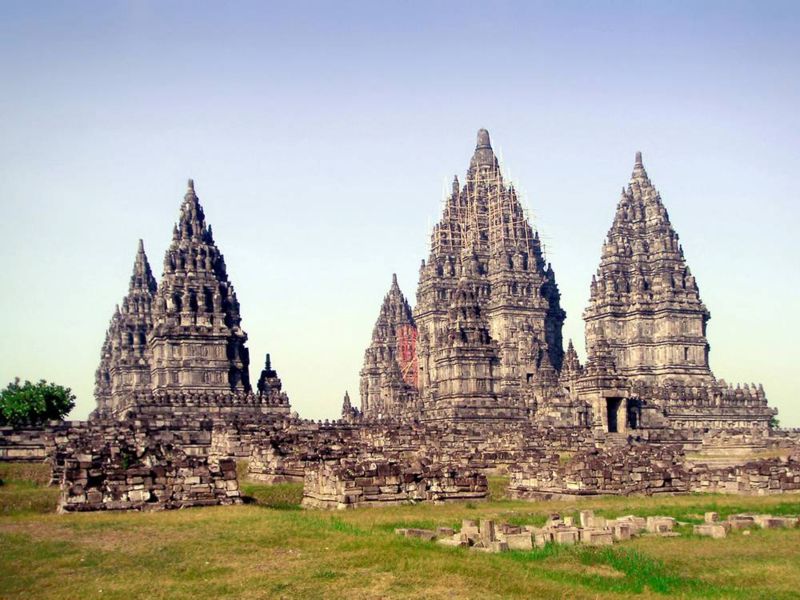
    Visit Prambanan and attend a performance of the Ramanyana Ballet. Yogya's other UNESCO wonder is the complex of ruined Hindu temples at Prambanan, which are almost as old as Borobudur. The temples of Prambanan are contained in one large park on the outskirts of a Yogyakarta suburb. Located nearby is an open-air theater, where performances of the Ramanyana saga, staged as a traditional Javanese dance performance, are held. Time your visit so you can take in the ballet that night in the very shadow of Prambanan.

  4. Step 4

    Go to the Kraton. As palaces go, Yogya's Kraton isn't spectacular, but it has its charms and is located in the center of Yogyakarta, so you can see much of the old surviving Dutch colonial architecture on the walk there. Gamelan performances are held there every day, and after taking in a performance, you can visit gamelan music schools in the area to expand your understanding of Java's traditional music.

  5. Step 5

    Shop for batik. Yogya and the neighboring city of Solo are centers for the crafts of batik (dyed textiles), wayang golek (wooden puppets) and wayang kulit (leather puppets). Be sure to visit the government-run batik school and shop. Some excellent work is to be found there at bargain prices.

  6. Step 6
    Mount Merapi
    Mount Merapi

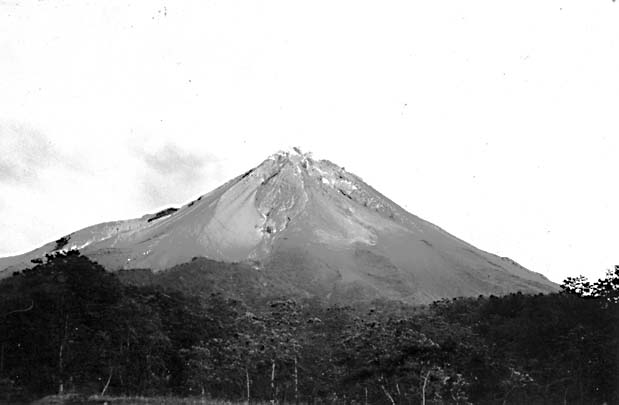
    Take a day trip to Gunung (Mount) Merapi, Indonesia's most active volcano. Be sure to check on Merapi's status before heading out. As Indonesia's most active volcano, it might actually be rumbling during your visit, as the volcano has regular, minor eruptions. Take the bus to the village of Selo. From there, a hike to the summit will take 3 to 4 hours.

Source : www.ehow.com

Friday, January 22, 2010

West Java

West java is one of the 17,000 islands that make up the archipelago of the Republic of Indonesia, Java has historically been considered the heartland. Where Java has led-culturally, economically and politically down through the centuries, other regions have followed. On Java, still the most densely populated island of Indonesia, there are five Provinces. West Java is the largest, with the greatest population, and, some would claim, with the most pride.

West Java Province is located at part of western Java Island. The enchanting of Sunda land stretches from Sunda Strait in the west to the borders of Central Java in the east. The locals’ people know West Java Province as the Land of Sunda.

The region is primarily mountainous, with rich green valleys hugging lofty volcanic peaks, many of which surround the capital of West Java province. The history of West Java is a story of trade, spices, and the rise and fall of powerful kingdoms. In the late 1500’s the region was ruled from mighty Cirebon,

tea-mountain2

which still survives as a sultanate today, although a shadow of its former glory. West Java was of the first contact points in Indonesia for Indian traders and their cultural influences, and it was here that the Dutch and British first set foot in the archipelago.

This province has its own unique culture and language, both called Sundanese that is also used to call its people. The ancient kingdoms of Tarumanegara, Pajajaran, Banten and Cirebon would make interesting studies for the student of archaeology. Cirebon is located on the border between West and Central Java, having a mixed culture originating from the ancient rice-terrace-in-west-javaCirebon and Banten kingdoms, resulting in similar customs and dialects of the two people, although Banten is located at the extreme western part of the province.

West Java province its self, is formed based on the Constitution number 11/1950 on the establishment of West Java. With the issuance of Constitution number 23/2000 on Banten Province, West Java Governor Assisting Territory I Banten was inaugurated as Banten Province with its territories comprising Serang Regency, Pandeglang Regency, Lebak Regency, Tangerang Regency and Mayoralty, and Cilegon Mayoralty. After the change, at present West Java consists of 18 regencies, nine mayoralties, 584 districts, 5,201 villages and 609 sub districts.
The capital city of West Java province is Bandung city. Bandung is situated 180 km southeast of Jakarta. The city gamed fame in 1955 as the venue for the first Afro-Asian Conference, which brought together the leaders of 29 Asian, and African nations with the aim to promote economic and cultural relations and take a common stand against colonialism.

The road from Jakarta to Bandung passes through a beautiful panorama of mountains, paddy fields and small holiday resorts. An expressway connects the crowded capital city with Bogor and the mountain areas, and onward to Bandung. It has a number of sea resorts on its western and southern coasts, which have modern hotels and are popular during the weekends. The Sundanese people are soft-spoken. The women of the Bandung region are known for their beauty. A lighthearted people who have a love for bright colors, their mournful “kecapi” music is memory of beautiful legends.

Geographically
Geographically, West Java Province is situated between 5 50′-7 50′ South parallels and 104 48′-104 48 East meridians.
West Java Province is bordered of:
North side: Java Sea and Jakarta
West side: Banten Province and Hindia Ocean
South side: Hindia Ocean
East side: Central Java Province.
This strategic geographical condition is an advantage for West Java particularly in communication and transportation. Northern region is plain area, while southern part is a hilly area with beaches, and the middle region is mountainous area. But after the establishment of Banten Province, the size of West Java becomes 35,746.26 kilometer square.

Topography
West Java has a characteristic as part of a volcanic belt, which spans from Sumatra Island to the northern part of Sulawesi Island. Its land can be divided into a region with steep mountains with altitude of more than 1,500 meter above the sea level in the South, moderate hill with elevation of 100 to 1,500 meters, and plain region in the north with elevation between 0 and 10 meters and river region.

Climate
West Java has tropical climate with temperature reaching 9 degrees Celsius at the Peak of Mount Pangrango and 34 degrees Celsius in north beach. The average rainfall is at 2,000 millimeters per year, but in the mountainous areas the rainfall could reach 3,000 to 5,000 millimeters per year.

Population
Based on the national census in 1999, West Java population after the separation of Banten stood at 34,555,622 people. In 2000, based on another census, the population grew to 35,500,611 people with population density of 1,022 inhabitants per square kilometer. The population growth between 1990 and 2000 reached 2.17 %. In 2003, the population has increased to 38,059,540 people with population density of 1,064 inhabitants per square kilometer.

Thursday, January 21, 2010

East Java Region

East Java has many natural attractions with its splendour volcanoes actives Mount Bromo and Kawah Ijen, and the many Park Nationalssuch as Baluran and Alas Purwo, Borobudur vacation.com provide the informations about tourist destinations in East Java to help you visit easier Bromo and Kawah Ijen as the most popular tourism objects.

Surabaya
The city established by Raden Wijaya the first king of Majapahit Kingdom in 1923. As the second biggest city in Indonesia and the capital province of east Java, Surabaya has many tourist attraction especially the colonial building and the complete zoo in South East Asia with the giant lizard of Komodo, The traditional harbor of Kalimas with the Phinisi, Arabic quarter od Kampung Arab. China town of Kya-kya and the museum of sampoerna, the biggest cigarette factory.

Bromo
The most spectacular and accessible park in the Indonesia archipelago, it lies between 78 54? - 8*13? South latitude and 112*51? - 113804? East Longitude on the globe. The area covers 58.000 hectares of administration of the Directorate General of Forest and Nature Conservation. There are 4 main reserves, namely: (a) the Laut Pasir Reserve (6.290 ha ) : the sea of sand- declared in 19919 as a protection of 10km wide soft bed of the Caldera (96 ha). (b) The ranu Pane - Ranu Regulo l 14 km away from he active Bromo on the southern of the Caldera (c) Ranu Kumbolo Reserve (1,340 ha) The Kumbolo lake is surrounded by a ring of the hill ops and scattered conifers. Both (b) and (c) were established in 1921. (d) the Ranu Darungan Reserve (380ha). was only recently included in October 1982. The whole region stretches 40 km from the north from the to the south and 30 km from East of West.

Semeru
The highest peak is the 3.676 meter Gunung Semeru followed by Gunung Kepolo (3.035), Gunung Arcopodo (3.150m), Gunung Jambangan (.020 m)Gunung Bajangan (2.800 m), Gunung Ayek-ayek (2.819 m), Gunung Kumbolo (2.390 m), Gunung Lanang (2.313 m ), Gunung Iderider (2.527 m ), Gunung Widodaren (2.614 M ), Gunung Bromo (2.392M),Gunung Mungal (2.480 m), Gunung Batok (2.440m), ending at panoramic platform of Gunung Pananjakan (2.770 m ) which is about 14 km from the village of Wonokitri which is less than 2 km from the town Tosari.

Ijen Crater
Great beautiful scenery of green sulfur lake, at 2000 m above sea level, where the story about humanity begin everyday in the morning. We can see the poor porters running down the mountain with 90 kg sulfur. Walking through the passage of the sulfur porter
The ijen plateau his is the centre of the Ijen - Merapi. Malang Reserve. The Principal attraction at ijen is the large, Superheroes crater lake which lies hidden between sheer walls of deeply furrowed rock at more than 200 meters. The ijen crater itself lies at approximately 2.300 meters above sen level. It form a twin volcano with the now extinct mount Merapi. The enormous crater lake. which is 200 meters deep and covers an area of more than halt a million square meters. Contains about 36 million cubic meters of streaming. Acid water ijen crater shows a special type of vacancies feature common to Indonesia, About 1 kilo meters in diameter and 175 metres deep

Baluran
Reserve national where we find the habitat of last Javanese bulls and the others exotic animals. Blaluran is wild game preserve and occupies about 25.000 hectares of open savannah, and hill country to the north of banyuwangi. the park is a haven for a great variety of native animals and bird species including deers, wild pigs, buffalos leopards, peacocks, monkeys, and the banteng - the Javanese wild ox. you can abserves the animals in their native habitat from a specially constructed tower.

Sukamade
The beach in where the turtles leave their eggs to regeneration Conservation efforts at Meru Betiri are Foused largely on the tour the nesting benches, of whies Sukamade is the most famous. Five species of turtle are known to lay eggs here. Emerging from the sea under cover of darkness, usually between about 9 pm and midnight, the turtle crawl slowly up the beach, deposit their eggs beneath half a meter of sand and return to the water in a process that takes several hour to complete

Malang
Malang is quiet and atmospheric, with magnificent scenery. the town is well situated for exploring some fine hindu temple ruins. the countryside on this run is particularly beautiful and malang is a pleasant city with just enough altitude to take the edge of the heat. it gets few western visitors, although it has good parks and trees and a large central market also it has many attractions in its surroundings, such as apple plantations,coban rondo waterfall,Singosari temple etc.

Banyuwangi

The Regency of Banyuwangi is located at the easternmost end of the Indonesian island of Java, and it is a very strategic area for one who wants to go to Bali. It is surrounded by mountainous and woody areas to the west; by sea to the east and south. Banyuwangi is only separated by Strait of Bali from Bali.

Sunday, January 17, 2010

How to Pack a Carry on Bag for Girls

If you're going on a plane ride, whether it be across the country or across the world, here are some tips for packing a carry-on bag.

Steps

  1. Choose your bag. Your bag should be light, big enough to carry what you need and cute. Try not to get a bag that looks flashy/expensive because it might be stolen. If you're going on a long flight, try to carry a backpack, because if you have a handbag/purse, everything will seem heavier.
  2. Think about the items you need. Some items that are almost always handy are:
  • iPod/iPhone. Try to download some new podcasts (these are free on the internet), or download some new songs from iTunes or a CD.
  • Books/ Magazines. If you like books, bring something you like to read, such as your romance novel. If you want magazines, bring a bunch that have all your favorite gossip, tips and other things you like.
  • Earphones. These are vital. Try to bring 2 pairs, in case one of yours stops working. (This occasionally happens and the plane earphones are not good at all)
  • Portable DVD/Game player. If your plane has Auto-Video on demand, then you will not need the DVD player. Having a Game player is always handy though, just make sure you charge it.
  • A journal. If you already started one, bring it along. If not, then it's the perfect time to start one on the plane! That way you'll have a record of your trip.
3. Wear something comfortable. You do not want to be stuck on an 18-hour flight in uncomfortable clothes! Try something cute and comfortable, the best of both worlds. Try loose jeans, (Not skinny jeans!) a tank top/ T-Shirt, and a light jacket, since air planes can get cold. If you are going on a long/ overnight flight, you may want to think about bringing an extra pair of comfortable clothes such as loose sweat pants and an extra T-shirt. Unless your night-clothes are appropriate/ warm enough for the plane, these things are your best bet.

4. Try not to wear accessories. Do not wear long/dangling earrings. Try studs or better yet, none at all Necklaces and bracelets will get in the way, and belts can be uncomfortable, especially with the seat belt. Try to keep it to just 1 watch (with the time of the place your going to) and studs, if you have your ears pierced.

5. Pack other miscellaneous items. Other things you may want include herbal sleeping pills (better than normal sleeping pills) and a small pillow. You might also want to bring a small blanket if the smell of the airplane ones bothers you.

6. Leave the stuffed animal at home as it could get lost. If you do bring one, leave it in your bag.

7. Bring snacks. Airplane food is gross, and sometimes they won't give you a free meal. Try those cute little cereal boxes, snack mixes (Chex-mix, cheese-it mix, cherio-mix.) If you are on a diet, or want something healthier, try granola mix, some of your favorite, non-sugary cereal in a plastic baggie. Also, if you want, you could order a special meal from the airlines, such as low sodium, vegetarian, or diabetic. They are usually served first and taste better.

Source : www.wikihow.com

Prambanan temple

candi_prambanan
  1. It was built around 850 CE by either Rakai Pikatan, king of the second Mataram dynasty, or Balitung Maha Sambu, during the Sanjaya Dynasty. Not long after its construction, the temple was abandoned and began to deteriorate. Reconstruction of the compound began in 1918. The main building was completed in around 1953. Much of the original stonework has been stolen and reused at remote construction sites. A temple will only be rebuilt if at least 75% of the original stones are available, and therefore only the foundation walls of most of the smaller shrines are now visible and with no plans for their reconstruction.
  2. The temple was damaged during the earthquake in Java in 2006. Early photos suggest that although the complex appears to be structurally intact, damage is significant. Large pieces of debris, including carvings, were scattered over the ground. The temple has been closed to the public until damage can be fully assessed. The head of Yogyakarta Archaeological Conservation Agency stated that: “it will take months to identify the precise damage”. However, some weeks later in 2006 the site re-opened for visitors. The immediate surroundings of the Hindu temples remain off-limits for safety reasons.

Loro Jonggrang complex

The Prambanan temple complex consists of three zones. The outer zone is a large space marked by a rectangular wall (destroyed). The original function is unknown; possibilities are that it was a sacred park, or priests’ boarding school (ashram). The supporting buildings for the temple complex were made from organic material; as a consequence no remains occur.

The middle zone consisted of four rows of 224 individual small shrines. These concentric rows of temples were made in identical design. Each row towards the center is slightly elevated. These shrines are called “Candi Perwara” or complementary temples, the additional buildings of the main temple. Some believed it was offered to the king as a sign of submission. The Perwara are arranged in four rows around the central temples, some believed it has something to do with four castes, made according to the rank of the people allowed to enter them; the row nearest to the central compound was accessible to the priests only, the other three were reserved for the nobles, the knights, and the simple people respectively. While another believed that the four rows of Perwara has nothing to do with four castes, it just simply made as meditation place for priests and as worship place for devotees.


The central compound is the holiest among the three zones. Its the square elevated platform surrounded by square stone wall with stone gates on each four cardinal points. This holiest compound is assembled of eight main shrines or candi. The three main shrines, called Trimurti (”three forms”), are dedicated to the three gods: Brahma the Creator, Vishnu the Keeper, and Shiva the Destroyer. The other three shrine in front of three main temples is dedicated to vahana of each gods. Between these row of main temple, on north and south side stands two Candi Apit. Beside these 8 main temples, there’s also 8 smaller shrines; 4 Candi Kelir on four cardinal direction of the entrance, and 4 Candi Patok on four corner.

The Shiva shrine at the center contains five chambers, four small chamber in every cardinal direction and one bigger main chamber in central part of the temple. The east chamber connect to central chamber that houses a three meter high statue of Shiva Mahadeva. The statue of Shiva stands on Yoni pedestal that bears the carving of Naga serpents on north side of pedestal. The other three smaller chambers contain statues of Hindu Gods related to Shiva; his consort Durga, the rishi Agastya, and Ganesha, his son. Statue of Agastya occupy the south chamber, the west chamber houses the statue of Ganesha, while the north chamber contains the statue of Durga Mahisasuramardini depicting Durga as the slayer of Bull demon. The shrine of Durga is also called the temple of Lara Jonggrang (Javanese: slender virgin), after a Javanese legend of princess Lara Jonggrang.


The two other main shrines are that of Vishnu on the north side of Shiva shrine, and the one of Brahma on the south. Both temple facing east and each contain only one large chamber, each dedicated to respected gods; Brahma temple contains the statue of Brahma and Vishnu temple houses the statue of Vishnu.

In front of each main temple is a smaller temples on the east side, dedicated to the mounts (vahana)of the respective gods - the bull Nandi for Shiva, the gander Angsa for Brahma, and Vishnu’s Eagle Garuda. Garuda holds important role for Indonesia, which serves as the national symbol of Indonesia, also to the airline Garuda Indonesia.

The bas-reliefs along the balustrades on the gallery around Shiva and Brahma temple depict the Ramayana legend. They illustrate how Sita, the wife of Rama, is abducted by Ravana. The monkey king Hanuman brings his army to help Rama and rescue Sita. This story is also shown by the Ramayana Ballet, regularly performed at full moon at Trimurti open air theatre in west side of the illuminated Prambanan complex. On the balsutrades in Vishnu temple there is series of bas-relief depict the story of lord Krishna.

Borobudur Temple

The province of Central Java, around the city of Yogyakarta, is the most famous part of Java and is, in fact, its cultural centre. This is in part because of the presence there of a variety of religious influences-Buddhist, Hindu, and other indigenous beliefs, which resulted in the construction of the impressive temples of Borobudur, Prambanan and the Dieng temple complex.

Yogyakarta or simply Yogya, is one of the foremost cultural centers of Java. Located at the foot of the active Merapi volcano & It stretches till the Indian Ocean, Yogyakarta was in the 16th and 17th centuries the seat of the mighty Javanese empire of Mataram., from which present day Yogyakarta has inherited the best of traditions. The city itself has a special charm which seldom fails to captivate the visitor. This province is one of the most densely populated areas of Indonesia. The city came into being in 1755, after the division of Mataram into the Sultanates of Yogyakarta and Surakarta (Solo). Gamelan, classical and contemporary Javanese dances, the
wayang kulit leather puppet theater and other expressions of traditional art will keep the visitor spellbound. Local craftsmen excel in the arts of batiks, silver and leather work.

The 300 year old city of Yogyakarta is the cultural heart of Java. Here also is Indonesia’s oldest palace ‘The Kraton,’ still the domicile of Jogya’s royalty. Even now the current Sultan of Yogyakarta retains remarkable political prestige. Yogyakarta offers an abundance of Javanese art, painting, silverwork, batik handcraft, traditional Javanese dances, as well as contemporary art. The city is the cultural centre not only of Java, but of the whole of Indonesia. From Yogyakarta one can travel easily to the Borobudur Temple and Prambanan temples, which are half-day trips from the city. Yogyakarta is situated between the foot of the still-activOcean, home of ‘Loro Kidul,’ Queen of the South Seas. e Merapi volcano and the mystical Indian Ocean, home of ‘Loro Kidul,’ Queen of the South Seas.

Yogyakarta is often called the main gateway to the center of Java where it is geographically located. There is daily air service to Yogya from Jakarta, Surabaya and Bali as well as regular train service and easy accessibility by road.

Thursday, January 14, 2010

Bromo and Kawah Ijen independently

There are two ways to approach Bromo:

1. From Pasuruan to Tosari west of Bromo

2. From Probolinggo to Cemoro Lawang east of Bromo

Both at Tosari and at Cemoro Lawang they offer a "sunrise tour" by Toyota 4WD for Rp 350,000 (price fixed by the village cooperative). The tour brings you to Penanjakan summit (2770 m) with a fine view over mt Batok (2440 m), mt Bromo (2392 m) and mt Semeru (3600 m) in the distance - and afterwards to mt Bromo. However, in december the sunrise may be disappointing because of clouds. And avoid Penanjakan summit on weekends and holidays: even on weekdays some jostling is going on for the best spot to make pictures.

I you would renounce on Penanjakan, from Cemoro Lawang on the caldera rim it is a walk of not more than two hours down into and across the sandsea and up the slopes and stairs of mt Bromo. If you are accustomed to trekking no need for a car or a horse. It is also possible to walk from Cemoro Lawang to Penanjakan, but it looked like a very steep ascent to me.

Your problem then is how to get to Cemoro Lawang on the caldera rim by public transport. Regular buses bring you to Probolinggo, from there it should not be difficult to hop on a minibus to Sukapura (9 km from the crater rim) and with luck to Ngadisari (3 km from Cemoro Lawang). The last leg of 3 or 9 km you probably have to try your luck walking and hitchhiking. You'll get there allowing enough time.

The most popular accommodation in Cemoro Lawang is Lava View Lodge (probably Rp 250,000 for a room), but you can find lost of budget accommodation (homestay style) between Ngadisari and Cemoro Lawang. Yoschi's guesthouse should be around Rp 100,000 nowadays - but there are many others, villagers may offer to stay with them for a modest amount.

Re IJEN

The hike to Ijen crater starts at Pos Paltuding. There is only very basic accommodation at Pos Paltuding, probably Rp 100,000. From there everyone has to hike up Ijen volcano (550 m rise, 1 to 1,5 hrs) and if you dare down into the crater (half an hour each way, I found it the highlight of the trip despite the sulphur fumes).

However, no public transport goes as far as Pos Paltuding. The usual stay over for people with a car is at the plantation's Arabika Guesthouse at Sempol, still 13 km from Pos Paltuding.

A regular bus will take you to Bondowoso. My Lonely Planet says that from Bondowoso minibuses run to Sempol, a 2,5 hour ride, but with irregular departure times - leaving when full. And at Sempol you may hire an ojek (riding on the back of a motorbike) to Pos Paltuding and back. Failing that you could try to share with others hiring a jeep from the Arabika Guesthouse - up to five people per jeep.

Again, allow time and you'll get there.

Tuesday, January 12, 2010

How to Enjoy the Gili Islands, Indonesia

Idyllic and remote tropical island destinations are still available for travelers' enjoyment, and for a balance of being off the beaten path and comfort, few compete with the Gili Islands in Indonesia. A set of three small islands off the northwestern corner of the larger island of Lombok, the Gilis attract surfers, divers and people just looking to get away from it all in a hammock by the shore.
Instructions
  1. Step 1

    Get to Lombok. The island's airport is located at Mataram, which is also the capital of Lombok. You can fly there on domestic routes from elsewhere in Indonesia, the main ones being Jakarta and Denpasar in Bali. Another option is the sea ferry from Bali.

  2. Step 2

    Get to the Gilis. If you are taking the sea ferry, odds are you have purchased a transport package that is taking you the entire way to the Gilis. In this case, you have nothing to worry about, past the usual basic travel precautions. If you have flown or are improvising your way from the ferry, you will have more work ahead of you. Simplest, fastest and most expensive is to hire a taxi. Next would be to work your way to the northwest corner of the island by bemo, the converted mini-buses that serve as local public transport across Indoensia. Third would be to buy a ticket on a tourist mini-bus once you are already in Lombok.

  3. Step 3

    Beware of porters! Once you have arrived on the northwest coast and are waiting for your ferry to the Gilis, watch your luggage like a hawk. Best of all would be to sit on it. When the boats arrive, local "porters" will seize it, run down the beach and put it on a boat. They will then demand an inflated payment for the "service" and gang up on you if you refuse to pay. Violence with these scam porters is not unheard of, so it's best to just prevent them from taking your stuff in the first place.

  4. Step 4

    Pick which Gili you want to go to. There are three islands: Air, Trawangan and Meno. Gili Trawangan is the largest and most popular, being home to the backpacker party scene on the Gilis. Air is the more adult, pseudo-resort of the three islands. Meno is the place to go if you want to do your own "Castaway," as it is the least developed and quietest of the three.

  5. Step 5

    Get your beach spot thing on. Whatever it is that you want to do at the beach, you will find it on the Gilis. Gorgeous white sand or a hammock strung up between coconut trees? Check. SCUBA diving and snorkeling with sea turtles? Check. Surfing? Check. Great seafood. Check. Great sunsets? The sun sets behind the giant Gunung Rinjani on Lombok, so definitely "check."

  6. Step 6

    Consider a trek to Gunung Rinjani. Across the straits on Lombok, the 12,224 heights of Gunung (Mount) Rinajni looms. This is a semi-active volcano, and the second largest in Indonesia. You can book two to three day trekking trips there from the Gilis, so if you tire of the pleasures of the shore, you can trade them for a short, hard trip up the side of a tropical volcanic mountain.

Source : www.ehow.com

How to Plan Your Honeymoon in Bali

The exotic beauty of Bali's people and landscape transport visitors to another time and place, where tradition is treasure. Enjoy artist mountain villages, manicured rice terraces, cleansing rivers, world-class diving, surfing and golf, and the amazing Balinese furniture and architecture.
Instructions

Things You'll Need:

  • Long Pants
  • Long-sleeved Shirts
  • Swimsuits
  • Local Guidebooks
  • Maps
  • Bottled Water
  • Airline Tickets
  • Golf Clubs
  • Surfboards
  • Maps
  • Swimsuits
  1. Step 1

    Be prepared, Bali is sheltered from the turmoil other parts of Indonesia can experience. Rich in natural and cultural beauty, the island offers myriad outdoor activities - but luxury and relaxation don't come cheap.

  2. Step 2

    Fly Singapore Airlines (call (800) 742-3333) to Denpasar, and book through Asian Affair Holidays (call (800) 742-3133), which runs fantastic round-trip airfare specials with five-night accommodations for as little as $1,200 U.S.

  3. Step 3

    Stay in one of the deluxe Begawan Giri Estate villas in Ubud, Bali's famous artist and craftsperson town in the rice-terraced mountainous interior.

  4. Step 4

    Stroll the sculpted gardens of Begawan Giri (Wise Man's Mountain), swim in placid pools and marvel at the luxurious carved wood furniture and villa architecture.

  5. Step 5

    Enjoy the world-class golf and surfing beaches while renting an authentic Balinese villa through Bali Vacation Properties (see bali-properties.com).

  6. Step 6

    Prepare for heat, humidity and mosquitoes (mostly at night). Wear light clothing and a bathing suit where appropriate, and long-sleeved shirts and long cotton pants at night to ward off possible malaria-infested mosquitoes (see Warnings).

  7. Step 7

    Drink Bintang (Star) beer, Bali's own brew. Cool down in the shade and rehydrate with some bottled water whenever possible.

Source : www.ehow.com

Sunday, January 10, 2010

Train Traveling in Indonesia

Indonesia is an archipelago nation with thousands of islands, only two of which have reliable rail service. Even at that, "reliable" might be a stretch for Sumatra. Java on the other other hand is well-connected by rails. Spice up your travel through Indonesia by soaking up the countryside, meeting locals and practicing your Bahasa Indonesia language skills in a lively rail car.

    Timetables & Tickets

  1. The national train operator in Indonesia is PT Kereta Api (www.infoka.kereta-api.com). All Indonesian train schedules and timetables can be found on their website. Purchasing tickets can only be done at the ticket booths located in each station.
  2. Sumatra

  3. Although there is no one rail system covering the whole island, Sumatra has a few scattered rail services. For crossing from Medan to Panjang (where you can catch the ferry to Merak in Java) by rail, you will have complement your train travel with local buses. From Medan you can take two buses, first to Padang and another to Palembang, and from there you can catch a train at Kertapati Station to Panjang. For a more roundabout route, you can take the train from Medan to Kisaran, bus from Kisaran to Tanjungbalai, and then ferry from Kisaran to Batam to Palembang.
  4. Java

  5. The island of Java has the most extensive system of rails in Indonesia, linking most of its larger cities. Jakarta, Indonesia's capital and largest rail hub, has two major train stations of which rail travelers should be aware. Jakarta Kota, (usually written "Jakaratakota"), is the one closest to the old colonial center of the city. Jakarta Gambir (often written as just "Gambir") is set in Jakarta's modern downtown. The most common rail connections from Jakarta are Bandung and Surabaya.
  6. Jakarta to Surabaya

  7. Connecting Jakarta with Surabaya on Java are several different rail lines and routes, the most comfortable being the Argo Bromo Anggrek line, which has executive seats only. The trip can be made either during the day or time-efficiently overnight, although there are no sleeper berths.
  8. Classes

  9. There are generally three class options for Indonesian trains, particularly on Java. The classes are executive (eksecutif), business (bisnis) and economy (ekonomi). For the first two classes, seating is spacious and reservations are mandatory. Only executive cars have air-conditioning. Executive seats recline and come with footrests. Executive trains can be recognized by the name "Argo." Economy seating is generally crowded as no reservations can be made except for on a certain few long-haul trips.
Source : www.ehow.com

Friday, January 8, 2010

Merapi volcano

Merapi is the youngest in a group of volcanoes in southern Java. It is situated at a subduction zone, where the Indo-Australian Plate is sliding beneath the Eurasian Plate. It is one of at least 129 active volcanoes in Indonesia, part of the Pacific Ring of Fire – a section of fault lines stretching from the Western Hemisphere through Japan and South East Asia.[2] Stratigraphic analysis reveals that eruptions in the Merapi area began about 400,000 years ago, and from then until about 10,000 years ago, eruptions were typically effusive, and the outflowing lava emitted was basaltic. Since then, eruptions have become more explosive, with viscous andesitic lavas often generating lava domes. Dome collapse has often generated pyroclastic flows, and larger explosions, which have resulted in eruption columns, have also generated pyroclastic flows through column collapse.

Typically, small eruptions occur every two to three years, and larger ones every 10-15 years or so. Notable eruptions, often causing many deaths, have occurred in 1006, 1786, 1822, 1872 (the most violent eruption in recent history), and 1930—when thirteen villages were destroyed and 1400 people killed by pyroclastic flows.

A very large eruption in 1006 is claimed to have covered all of central Java with ash. The volcanic devastation is claimed to have led to the collapse of the Hindu Kingdom of Mataram, however there is insufficient evidence from that era for this to be substantiated.

Merapi continues hold particular significance for the Javanese: it is one of four places where officials from the royal palaces of Yogyakarta and Solo make annual offerings to placate the ancient Javanese spirits.

Monday, January 4, 2010

How to Travel With an Electronic Ticket

It doesn't matter how many pages you print from the internet when you purchase an air ticket. Sometimes these web sites or travel agencies have problems trying to issue an electronic ticket number or problems with connecting their systems to the airlines, causing awful surprises like “no reservation found" or even worse; you don't have a ticket number on your reservation, meaning you might need to pay for a new ticket in order to make the flight today, even if you can clear it up later.

Steps

  1. When you purchase your ticket the websites always will give you a confirmation number, THIS IS NOT THE TICKET NUMBER, is most of the times the reservation locator and it could be different for each airline.
  2. The E-ticket number is a serial of 13 numbers like 000-1234567890
  3. You could have one eticket number for the whole itinerary or different ticket numbers for different segments, lets say Miami - Los Angeles - Miami could be in one ticket number, or Miami - Los Angeles one etkt number and Los Angeles - Miami another.
Tips
Always make sure to have an itinerary printed for the flights you are going to take. This itinerary should have:
  • reservation locator for the airline (could be serial letters like RPPVL6)
  • Itinerary of flight with local departure time and local arrival time
  • Electronic ticket number for reservation like 654-1234567890
  • phone numbers of customer support from the travel agency or website (hopefully 24hour support)

Source : www.ehow.com

Saturday, January 2, 2010

How to Book Travel on Garuda Indonesia

Instructions

    Book Your Travel Aboard a Garuda Indonesia Flight

  1. Step 1

    Make your reservations via telephone. Contact Garuda Indonesia at its 24-hour call center at: 011 0807-1-807-807. When calling internationally outside the United States, substitute "011" with "00."

  2. Step 2

    Get details about the carrier's routes by visiting its Web site (see Resources below).

  3. Step 3

    Book your travel at any airport which Garuda Indonesia flies to or from.

  4. Select a Garuda Indonesia Travel Destination

  5. Step 1

    Choose from any of the Indonesian cities listed on the Garuda Indonesia Web site, which include Banda Aceh, Balikpapan, Batam and Timika among many others.

  6. Step 2

    Notice that Garuda Indonesia also operates in conjunction with other airlines to offer cargo flights to Korea and China.

  7. Step 3

    See that together with many other airlines, Garuda Indonesia offers additional international passenger services to cities such as Kuala Lumpur, London, Paris, Frankfurt, Manila, Taipei, Seoul and many more.

  8. Familiarize Yourself with Garuda Indonesia's Products and Services

  9. Step 1

    Find that Garuda Indonesia offers telephone check-in for flights between Jakarta and domestic destinations, and Jakarta and Singapore.

  10. Step 2

    Know that telephone check-in entitles qualified passengers to a confirmed seat, a boarding pass upon arrival at the airport and early check-in.

  11. Step 3

    Use your Garuda Indonesia boarding pass for the next 7 days to get discounts with hotels and merchants involved in the True Value Boarding Pass program. This currently applies only to Bali, Lombok, Jakarta, Bandung, Surabaya and Padang.

  12. Choose a Departure City Served by Garuda Indonesia

  13. Step 1

    Find that Garuda Indonesia departs from cities throughout Indonesia, from Jakarta to Surabaya and numerous additional cities.

  14. Step 2

    See that Garuda Indonesia also departs from other Asian cities such as Tokyo, Hong Kong and Kuala Lumpur.

  15. Step 3

    Select origin points in Europe such as Frankfurt and London.

  16. Step 4

    Decide to depart aboard Garuda Indonesia from Australian cities like Melbourne, Perth and Sydney.

  17. Step 5

    Remember that because Garuda Indonesia is headquartered in Jakarta, the greatest number and frequency of departures will be from Soekarno-Hatta International Airport in Jakarta.

Source : www.ehow.com

How to Avoid Jet Lag

Timezone travel is a pain. When you're flying across timezones, it can take your body a bit of time to adjust. In the meantime, you're graced with unpleasant symptoms like fatigue, insomnia, constipation, diarrhea, confusion, and more - enough to make any trip or vacation difficult to enjoy - while your body matches its internal clock to your new external clock. Fortunately, there are some things you can do to ease and speed up the transition.

Steps

Before Traveling

  1. Every week, push your schedule one hour back or forward, depending on where you're going. The more time zones you're flying across, the earlier you'll need to start. This will give your body a chance to gradually adjust to your new time zone.[1] If the time difference is several hours, however, it may prove inconvenient to spend your final week before leaving 3 or 4 or more hours ahead or behind everyone else. Alternatively, you can shift your eating and sleeping schedule by an hour a day.[2][3]

While Traveling

  1. Stay hydrated. On the day of your flight, drink plenty of fluids. Dehydration is one of the symptoms of jet lag, and the dry, cabin air on the plane doesn't help. Stay away from any beverages with alchohol or caffeine in them, as the side effects can do more harm than good.
  2. Set your watch to the time at your destination as soon as you begin your flight.
  3. Sleep (or stay awake) like you're already there. If it's daylight at your destination, try to avoid sleeping on the plane.[4] If it's nighttime at your destination when you're on the plane, try to sleep. Use earplugs, eyeshades, and turn on the air-conditioning valve (cooler temperatures help you fall asleep faster).[3]
If you'll be needing sleep while on the plane, try to book a roomier seat. In a narrow economy seat with little leg room, your body will produce an adrenaline-like substance to keep blood flowing up to your brain, and you won't be able to sleep as a result. More leg room in first class or business class seats helps prevent this from happening.[3]

4
Eat like you're already there. Avoid eating airplane food, since it's generally served on a schedule that's consistent with the time zone you're leaving, not the one you're going to.[3] If you're hungry, snack lightly until you arrive at your destination, and eat during what would be mealtimes there.

At Your Destination

  1. Play or exercise, preferably in the sun. If it's daytime at your destination, spend as much time outside as you can. The exposure to sunlight will help your brain adjust to the new timezone.[5]

    • Remain active - don't just go to your hotel room and sit in front of the television. If you desperately need a nap, take one only for 30 minutes. Any more than that will make jet lag worse.[6][7]
    • If you are on a business trip, play may be out of the question. No problem; any exertion (for example, a brisk walk) will help, and doing it in sunlight will make it even more effective. Can't get outside? Open the curtains over the hotel window to let in as much sun as possible, and do some exercises in the room. Outside is best, but any exercise in bright light will help a lot. Be creative!
  2. Eat light meals according to your new timezone. Not only is your sleep cycle adjusting, but so is your digestive routine. If you have any large, rich meals, that'll make it all the more difficult for your body to adapt, and symptoms like constipation and diarrhea will put a damper on your vacation.
  3. Exercise in the evening and in the morning. It'll help you get better sleep by tiring you out before going to bed (as long as you exercise a few hours before bed, so that the body has time to calm down) and it'll help make you feel more awake in the morning by getting your blood flowing.[7]
  4. Have a protein-rich breakfast the morning after you arrive. It'll help with alertness.[3]
Source : www.wikihow.com